.png)
Africa’s New Political Direction: Between Sovereignty and the Old Order
- Nakfa Eritrea
- 28 minutes ago
- 6 min read
Across the African continent, a new political language is emerging. It is no longer whispered quietly in closed meetings or spoken only by revolutionary historians remembering the dreams of the 1950s and 1960s. Today it is spoken publicly, sometimes defiantly, by governments, military leaders, youth movements, intellectuals, and ordinary citizens tired of watching Africa remain politically independent on paper while structurally dependent in reality.
For decades many African governments operated within a system where approval from European capitals, international financial institutions, and foreign security alliances often carried more weight than the demands of their own populations.
African presidents routinely traveled to Paris, London, Brussels, or Washington to negotiate policies that directly affected African economies, resources, and military affairs. The symbolism mattered. Meetings were often hosted in Europe, decisions were shaped abroad, and Africa was expected to participate as a junior partner rather than an equal civilization with its own strategic interests.
That atmosphere is beginning to change.
The recent diplomatic tensions surrounding where meetings should be held between African leaders and European officials represent more than a disagreement over protocol. They symbolize a deeper shift taking place across the continent. When France’s president, Emmanuel Macron, reportedly pushed for meetings to be held in France while engaging with William Ruto, many observers across Africa viewed the moment through a historical lens. In previous decades, many African leaders would have immediately accepted such arrangements without resistance. Today, however, there is growing public pressure for African leaders to assert political dignity and reject relationships that appear rooted in colonial-era assumptions.
This new posture did not emerge overnight. It is connected to a long history of African frustration with systems that many citizens believe preserved foreign influence long after formal colonialism ended. Across parts of West Africa especially, there has been increasing hostility toward France’s military, economic, and political role. In countries like Burkina Faso, large segments of the population argued that foreign military partnerships failed to deliver security while allowing outside powers to maintain strategic control.
The expulsion of French forces from Burkina Faso therefore became more than a military decision. To supporters, it represented psychological decolonization. Whether one agrees with every action taken by the country’s leadership or not, the symbolism resonated deeply across Africa. Many citizens interpreted it as a declaration that African states no longer wished to remain permanently tied to former colonial powers for legitimacy or security.
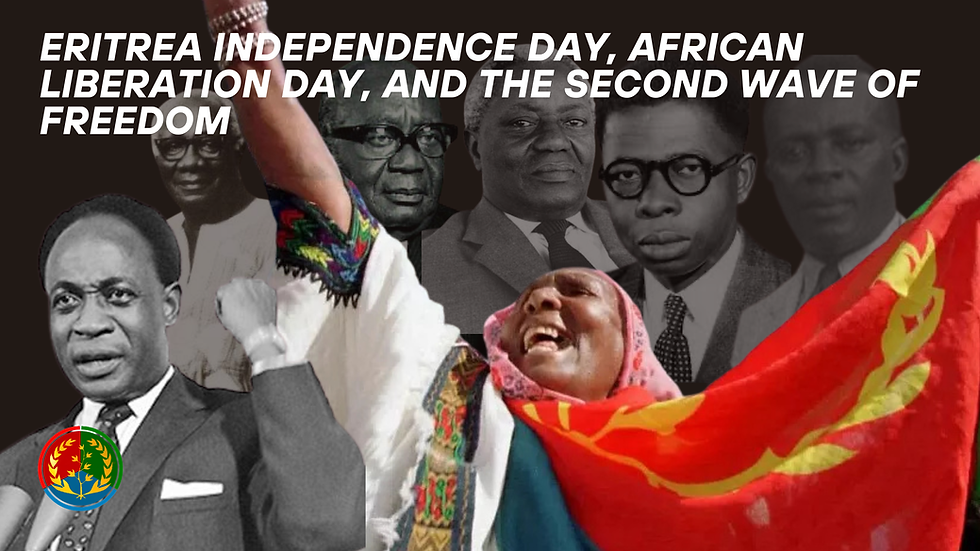
This growing mood of sovereignty has also revived interest in historical African movements that challenged foreign domination long before the current generation. One of the most discussed examples is the Casablanca Group of the early 1960s. Leaders associated with that bloc, including figures such as Kwame Nkrumah and Gamal Abdel Nasser, envisioned an Africa capable of acting independently from both Western and Soviet power structures during the Cold War.
The Casablanca vision emphasized continental unity, political independence, strategic self-defense, and economic sovereignty. Although the movement ultimately lost influence to more moderate approaches represented by the Monrovia bloc, its ideas never disappeared. In fact, many of today’s debates about foreign military bases, control of natural resources, debt dependency, and African self-determination echo the same arguments raised by Pan-Africanists over half a century ago.
To many critics of the current African political order, the tragedy is not simply that colonialism happened, but that too many post-independence elites preserved systems that continued to benefit foreign powers. These critics argue that some African leaders became intermediaries between external interests and African populations rather than defenders of national sovereignty.
This is where accusations of “sellout leadership” enter the discussion.
Across social media, universities, activist circles, and political commentary, frustration has grown toward African governments perceived as overly aligned with foreign agendas. Ethiopia has increasingly become part of these debates, especially due to its expanding regional partnerships and diplomatic balancing between powerful international actors.
The government of Ethiopia has attempted to position itself as a major regional power capable of engaging multiple global partners simultaneously, including Gulf states, Western governments, China, Russia, Türkiye, and Israel. Supporters of this strategy argue that Ethiopia is acting pragmatically in a multipolar world where states must secure investment, military cooperation, and diplomatic leverage from many directions.
Critics, however, interpret some of these relationships very differently.
Particular controversy has surrounded Ethiopia’s reported cooperation with the United Arab Emirates and Israel on regional security and strategic projects. These relationships are viewed by some Pan-African critics as evidence that certain African governments remain willing to work closely with outside powers accused of destabilizing parts of Africa and the Middle East.
The UAE’s growing influence across the Horn of Africa, the Red Sea, and parts of East Africa has become one of the defining geopolitical developments of the last decade. Through port agreements, infrastructure investments, military cooperation, and political alliances, Gulf states have expanded their presence dramatically. Supporters describe these partnerships as economically beneficial and strategically necessary. Critics counter that such arrangements risk placing African infrastructure and security interests under foreign influence.
Israel’s involvement in African affairs also generates strong reactions, particularly because of the global debates surrounding Palestine, surveillance technology exports, intelligence cooperation, and military partnerships. Some African activists believe that governments cooperating closely with Israel contradict the anti-colonial traditions many African liberation movements once championed.
Yet the broader issue extends beyond any single country. The real question facing Africa is whether the continent can finally construct an independent geopolitical framework rooted primarily in African interests.
For generations Africa has often been treated as a strategic arena where outside powers compete for resources, shipping lanes, minerals, labor, agricultural land, and military positioning. During the Cold War, African governments were pressured to align either with the United States or the Soviet Union. In the modern era, the competition has expanded to include China, Gulf monarchies, Türkiye, India, Russia, Europe, and multinational corporations.
The danger for Africa is not engagement itself. Every region of the world forms alliances and pursues international partnerships. The danger lies in unequal relationships where African states provide access to land, minerals, markets, and military positioning while receiving limited long-term sovereignty in return.
This is why countries such as Eritrea attract attention from many Africans who admire resistance to external pressure. Eritrea’s government, led by Isaias Afwerki, has long positioned itself as skeptical of Western intervention, foreign military dominance, and dependency on international institutions.
Supporters view Eritrea as a symbol of political stubbornness in a world where many smaller nations bend under external pressure. They argue that despite sanctions, isolation, criticism, and economic hardship, Eritrea maintained an independent foreign policy rather than fully submitting to external powers.
Critics of Eritrea, on the other hand, point to concerns involving governance, political freedoms, and economic limitations. But even many who disagree with Eritrea’s internal political structure acknowledge that the country became a reference point in wider African discussions about sovereignty and resistance.
That is part of the reason why younger Pan-African voices increasingly revisit historical liberation struggles. They see connections between past anti-colonial movements and present-day frustrations with foreign military bases, debt dependency, NGO influence, resource extraction, and diplomatic pressure.
At the center of this debate is an uncomfortable reality: Africa possesses enormous strategic value.
The continent holds critical minerals needed for modern technology, some of the world’s youngest populations, major agricultural potential, key maritime routes, and expanding consumer markets. In a world entering a new era of geopolitical competition, Africa is no longer peripheral. It is central.
But being strategically important does not automatically produce freedom or prosperity.
History shows that regions rich in resources often become targets for external competition. The challenge for Africa is whether its leaders can build institutions capable of protecting national and continental interests rather than trading long-term sovereignty for short-term political survival.
Many African citizens increasingly believe the old political formula is collapsing. Younger generations are less emotionally tied to former colonial powers and more willing to question inherited diplomatic relationships. Social media has accelerated this process by allowing Africans across different countries to compare experiences, debate history, and critique leadership in real time.
This has produced a sharper political consciousness around issues such as military agreements, foreign currency dependency, control of natural resources, and the symbolism of international diplomacy.
When African leaders travel abroad, people now ask harder questions. Who benefits from the agreements being signed? Who controls the infrastructure being built? Who profits from mining contracts? Why are foreign troops stationed on African soil? Why do African economies remain dependent on exporting raw materials while importing finished products?
These questions are no longer confined to radical political circles. They are becoming mainstream.
Still, the path forward is not simple.
Africa is not politically unified. Different countries possess different historical experiences, economic realities, alliances, and security concerns. Some governments prioritize stability above all else. Others seek investment regardless of political origin. Some fear isolation more than dependency. Others believe confrontation with foreign influence is necessary for genuine sovereignty.
This diversity means the continent will likely continue experiencing tension between two broad visions.
One vision believes Africa’s future depends on remaining closely integrated with Western financial systems, European diplomatic structures, foreign military partnerships, and global institutions largely shaped outside the continent. Leaders who follow this path often argue that Africa cannot afford confrontation with major powers and must instead operate pragmatically within the existing international order.
The second vision argues almost the opposite. It believes Africa’s underdevelopment is deeply connected to the very systems many governments continue to depend upon. Supporters of this position argue that as long as African states remain economically dependent, militarily vulnerable, and politically influenced by outside powers, true independence will remain incomplete.
This ideological divide explains why African politics increasingly appears split between governments seeking greater strategic autonomy and governments maintaining older diplomatic patterns.


Comments